
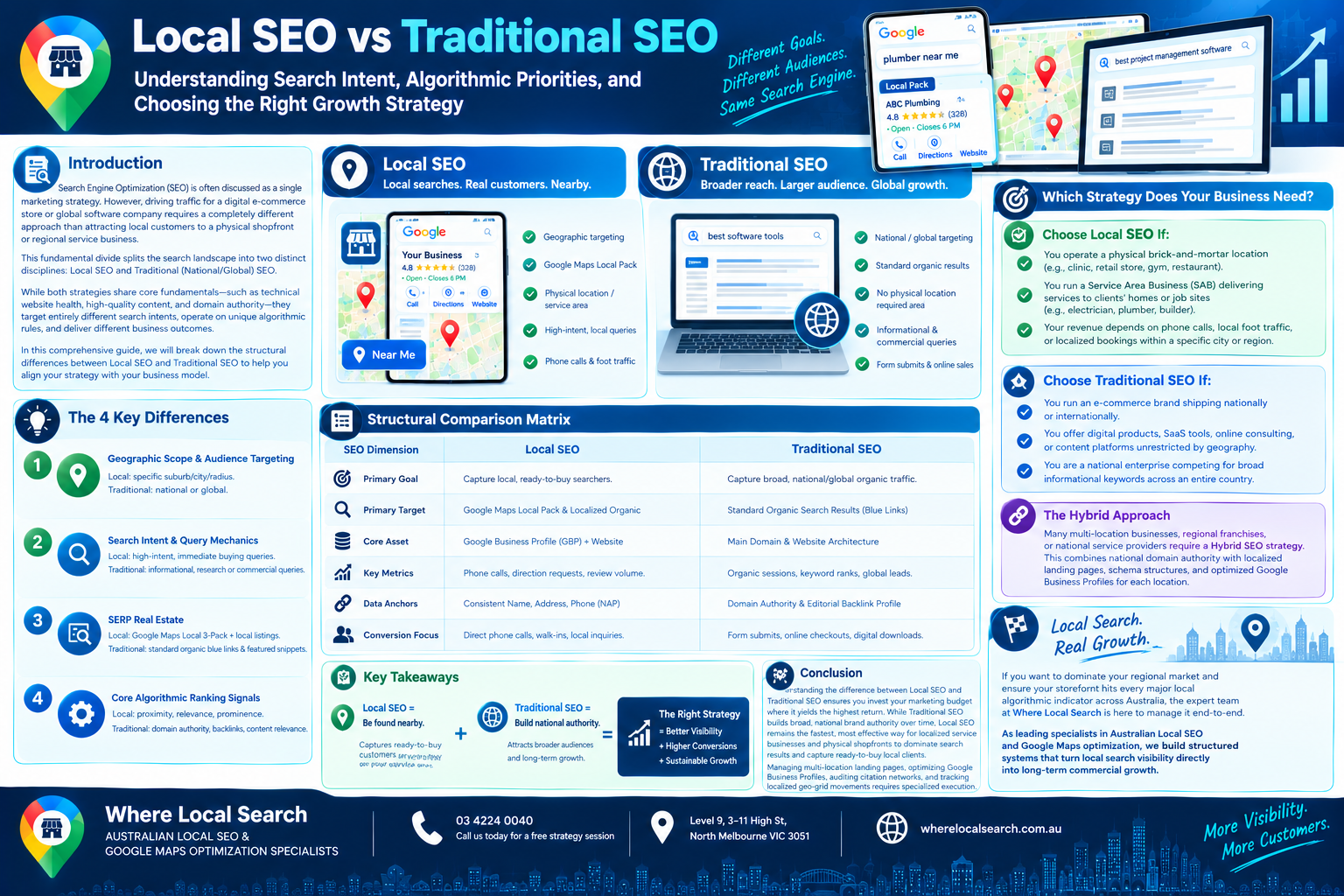
Understanding Search Intent, Algorithmic Priorities, and Choosing the Right Growth Strategy
Search Engine Optimization (SEO) is often discussed as a single marketing strategy. However, driving traffic for a digital e-commerce store or global software company requires a completely different approach than attracting local customers to a physical shopfront or regional service business.
This fundamental divide splits the search landscape into two distinct disciplines: Local SEO and Traditional (National/Global) SEO.
While both strategies share core fundamentals—such as technical website health, high-quality content, and domain authority—they target entirely different search intents, operate on unique algorithmic rules, and deliver different business outcomes.
In this comprehensive guide, we will break down the structural differences between Local SEO and Traditional SEO to help you align your strategy with your business model.
Core Differences: Local SEO vs Traditional SEO
1. Geographic Scope and Audience Targeting
Traditional SEO: Focuses on national or global search visibility. Physical location is largely irrelevant because the business operates online, ships products globally, or offers digital services (e.g., SaaS tools, national online retailers, blogs).
Local SEO: Geographically restricted. It targets consumers searching within a specific suburb, city, or radius around a physical location (e.g., emergency plumbers, medical clinics, local law firms, restaurants).
2. Search Intent and Query Mechanics
Traditional SEO: Operates primarily around informational, research, or commercial intent queries without geographic markers (e.g., "how to fix a leaking tap" or "best project management software").
Local SEO: Driven by high-intent, immediate buying queries that contain geographic modifiers or implicit local intent (e.g., "emergency plumber Parramatta" or "plumber near me").
3. Search Engine Results Page (SERP) Real Estate
Traditional SEO: Competes for rankings within the standard organic blue links and featured snippets on search results pages.
Local SEO: Targets the highly prominent Google Maps Local 3-Pack—which occupies prime screen real estate above standard organic links—alongside local map pins and localized organic listings.
4. Core Algorithmic Ranking Signals
Traditional SEO: Heavily relies on overall Domain Authority (DA), backlink profile volume/quality, comprehensive site architecture, and deep content relevance.
Local SEO: Balances content and backlinks with Google's three core local pillars: Distance (Proximity), Relevance, and Prominence. Key drivers include Google Business Profile optimization, local citation consistency (NAP data), review velocity/sentiment, and localized schema code.
Structural Comparison Matrix
| SEO Dimension | Local SEO | Traditional SEO |
|---|---|---|
| Primary Goal | Capture local, ready-to-buy searchers. | Capture broad, national/global organic traffic. |
| Primary Target | Google Maps Local Pack & Localized Organic | Standard Organic Search Results (Blue Links) |
| Core Asset | Google Business Profile (GBP) + Website | Main Domain & Website Architecture |
| Key Metrics | Phone calls, direction requests, review volume. | Organic sessions, keyword ranks, global leads. |
| Data Anchors | Consistent Name, Address, Phone (NAP) | Domain Authority & Editorial Backlink Profile |
| Conversion Focus | Direct phone calls, walk-ins, local inquiries. | Form submits, online checkouts, digital downloads. |
Which Strategy Does Your Business Need?
Choose Local SEO If:
☑ You operate a physical brick-and-mortar location (e.g., clinic, retail store, gym, restaurant).
☑ You run a Service Area Business (SAB) delivering services directly to clients' homes or job sites (e.g., electrician, plumber, builder, landscaper).
☑ Your revenue depends directly on phone calls, local foot traffic, or localized service bookings within a specific city or region.
Choose Traditional SEO If:
☑ You run an e-commerce brand shipping products nationally or internationally.
☑ You offer digital products, SaaS tools, online consulting, or content platforms unrestricted by geography.
☑ You are a national enterprise competing for broad informational keywords across an entire country.
The Hybrid Approach (Local + Traditional SEO)
Many multi-location businesses, regional franchises, or national service providers require a Hybrid SEO strategy. This involves building strong national domain authority through high-level content marketing while simultaneously deploying localized landing pages, schema structures, and optimized Google Business Profiles for every physical location they operate.
Conclusion
Understanding the difference between Local SEO and Traditional SEO ensures you invest your marketing budget where it yields the highest return. While Traditional SEO builds broad, national brand authority over time, Local SEO remains the fastest, most effective way for localized service businesses and physical shopfronts to dominate search results and capture ready-to-buy local clients.
Managing multi-location landing pages, optimizing Google Business Profiles, auditing citation networks, and tracking localized geo-grid movements requires specialized execution.
If you want to dominate your regional market and ensure your storefront hits every major local algorithmic indicator across Australia, the team at Where Local Search is here to manage it end-to-end. As leading specialists in Australian Local SEO and Google Maps optimization, we build structured systems that turn local search visibility directly into long-term commercial growth.